Polymeric SMA-Lipodisq Lipid nano-particles (SMA-LNP)

For the latest Information on LipodisqTM Technology by Malvern Cosmeceutics Limited (MCL) click here:

Innaxon is a proud, longstanding commercial partner of MCL in R&D of LipodisqTM Pharmaceutical Applications and now also provides MCL LipodisqTM research use reagents worldwide for Membrane Protein Stabilisation

Innaxon / AdipoGen Product Flyer:

  Lipodisq™ Styrene: Maleic Acid Copolymer [SMA] - in collaboration with AdipoGen
  Compounds powered by Lipodisq - in collaboration with AdipoGen

Viewing 1 — 17 of 17 items | Page 1 of 1
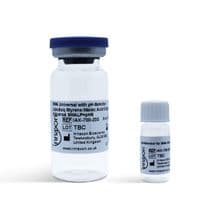
  • SMA Universal with pH-Selector Cat. No. #IAX-700-205

    SMA Universal with pH-Selector Cat. No. #IAX-700-205

    From: £95.00

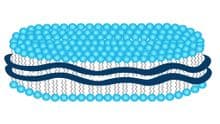
    • A nanoparticle (11-40nm) drug delivery system comprising a discoidal phospholipid bilayer • membrane stabilised by a chaperone molecular annulus.

    • All components are batch tested for Lipodisq™ formation using validated buffer systems, which are assessed by Dynamic Light Scattering (DLS) to confirm nano-formulated drug characteristics. The buffer solutions themselves are endotoxin tested and supplied sterile.

    • Lipodisq™ formation is highly efficient and shows a good safety profile, suitable for in vitro and in vivo (in experimental animals) investigations.

    Enables membrane proteins (MP) to be reconstituted within phospholipid membrane mimics
    without the use of mediating detergent. Nanodiscs formed from SMA are also referred to as styrene
    maleic acid lipid particles (SMALP). SMA-lipid particles are formed by directly extracting membrane
    proteins either from native cellular membranes (giving native nanodiscs) or from an intermediary
    MP-reconstituted synthetic membrane system to ultimately form self-assembled discoidal nano-structures
    of a general diameter of 10–12 nm.
    • uSMA requires only a single polymer grade to be used, avoids the need to select several SMA
    grades that each operate only over a narrow pH range
    • uSMA can be tailored to operate over a wide pH range 4.5-8.5 by simple addition of standard
    quantities of pH-Selector™
    • uSMA is insensitive to presence of divalent cations, Ca2+(<10mM) and Mg2+ (<30mM),
    suitable for use with ion pores, ABC transporters and ion sensitive GPCR assemblies
    • uSMA can be modified to form larger particles, reducing direct interactions between the polymer
    chaperone and membrane‑bound proteins
    The ability of SMA to create monodisperse nanodiscs covering a range of particle sizes facilitates
    the reconstitution of oligomeric MPs and MP complexes for analysis by various methods including
    fluorescence microscopy, NMR and single-particle cryo-EM. Lipodisq™ technology is a proprietary
    technology developed by Malvern Cosmeceutics Limited and is subject to granted international patents.
    See: https://lipodisq.com.

  • Lipodisq™ Styrene:Maleic Acid Copolymer 1:1 [SMA-100] Cat. No. #IAX-700-201

    Lipodisq™ Styrene:Maleic Acid Copolymer 1:1 [SMA-100] Cat. No. #IAX-700-201

    £95.00

    • A nanoparticle (11-40nm) drug delivery system comprising a discoidal phospholipid bilayer membrane stabilised by a chaperone molecular annulus.

    • LipodisqTM polymers are available as 4 defined structures (1:1, 2:1, 3:1 and 4:1 Styrene to Maleic Acid (SMA) rations) each individually operational within a selected pH range for optimal working conditions.

    • Components are batch-tested for LipodisqTM formation using buffer systems available, which are tested for nano-formulated drug analysis by Dynamic Light Scattering (DLS). These buffer solutions are endotoxin-tested and sterile.

    • LipodisqTM formation is highly efficient and nanodiscs show a good safety profile and are suitable for in vitro and in vivo (in experimental animals) investigations.

  • Lipodisq™ Styrene:Maleic Acid Copolymer 2:1 [SMA-200] Cat. No. #IAX-700-202

    Lipodisq™ Styrene:Maleic Acid Copolymer 2:1 [SMA-200] Cat. No. #IAX-700-202

    From: £92.00

    • A nanoparticle (11-40nm) drug delivery system comprising a discoidal phospholipid bilayer membrane stabilised by a chaperone molecular annulus.

    • Lipodisq™ polymers are available as 4 defined structures (1:1, 2:1, 3:1 and 4:1 Styrene to Maleic Acid (SMA) rations) each individually operational within a selected pH range for optimal working conditions. • Components are batch-tested for Lipodisq™ formation using buffer systems available, which are tested for nano-formulated drug analysis by Dynamic Light Scattering (DLS). These buffer solutions are endotoxin-tested and sterile.

    • Lipodisq™ formation is highly efficient and nanodiscs show a good safety profile and are suitable for in vitro and in vivo (in expermental animals) investigations.

  • Lipodisq™ Styrene:Maleic Acid Copolymer 3:1 [SMA-300] Cat. No. #IAX-700-203

    Lipodisq™ Styrene:Maleic Acid Copolymer 3:1 [SMA-300] Cat. No. #IAX-700-203

    From: £92.00

    • A nanoparticle (11-40nm) drug delivery system comprising a discoidal phospholipid bilayer membrane stabilised by a chaperone molecular annulus.

    • Lipodisq™ polymers are available as 4 defined structures (1:1, 2:1, 3:1 and 4:1 Styrene to Maleic Acid (SMA) rations) each individually operational within a selected pH range for optimal working conditions. • Components are batch-tested for Lipodisq™ formation using buffer systems available, which are tested for nano-formulated drug analysis by Dynamic Light Scattering (DLS). These buffer solutions are endotoxin-tested and sterile.

    • Lipodisq™ formation is highly efficient and nanodiscs show a good safety profile and are suitable for in vitro and in vivo (in expermental animals) investigations.

  • Lipodisq™ Styrene:Maleic Acid Copolymer 4:1 [SMA-400] Cat. No. #IAX-700-204

    Lipodisq™ Styrene:Maleic Acid Copolymer 4:1 [SMA-400] Cat. No. #IAX-700-204

    £92.00

    • A nanoparticle (11-40nm) drug delivery system comprising a discoidal phospholipid bilayer membrane stabilised by a chaperone molecular annulus.

    • Lipodisq™ polymers are available as 4 defined structures (1:1, 2:1, 3:1 and 4:1 Styrene to Maleic Acid (SMA) rations) each individually operational within a selected pH range for optimal working conditions. • Components are batch-tested for Lipodisq™ formation using buffer systems available, which are tested for nano-formulated drug analysis by Dynamic Light Scattering (DLS). These buffer solutions are endotoxin-tested and sterile.

    • Lipodisq™ formation is highly efficient and nanodiscs show a good safety profile and are suitable for in vitro and in vivo (in expermental animals) investigations.

  • DMPC (1,2-Dimyristoyl-sn-glycero-3-phosphocholine) (14:0 PC) Cat. No. #IAX-700-400

    DMPC (1,2-Dimyristoyl-sn-glycero-3-phosphocholine) (14:0 PC) Cat. No. #IAX-700-400

    From: £42.00

    • A nanoparticle (11-40nm) drug delivery system comprising a discoidal phospholipid bilayer membrane stabilised by a chaperone molecular annulus.

    • LipodisqTM polymers are available as 4 defined structures (1:1, 2:1, 3:1 and 4:1 Styrene to Maleic Acid (SMA) rations) each individually operational within a selected pH range for optimal working conditions.

    • Components are batch-tested for LipodisqTM formation using buffer systems available, which are tested for nano-formulated drug analysis by Dynamic Light Scattering (DLS). These buffer solutions are endotoxin-tested and sterile.

    • LipodisqTM formation is highly efficient and nanodiscs show a good safety profile and are suitable for in vitro and in vivo (in experimental animals) investigations.

  • LipodisqTM Control Sterile Solution Cat. No. #IAX-700-100

    LipodisqTM Control Sterile Solution Cat. No. #IAX-700-100

    £165.00
    Control LipodisqTM solution. Ready-to-use!
    Cannot be used to formulate / incorporate actives.
    • A nanoparticle (11-40nm) drug delivery system comprising a discoidal phospholipid bilayer membrane stabilised by a chaperone molecule annulus.
    • Internal properties of the phospholipid membrane support the disposition and stabilisation of drug molecule candidates and preserve the native conformation of membrane molecules.
    • The resulting encapsulated actives are rendered water-soluble and specialised for intra-cellular penetration/delivery via endosomal uptake mechanisms.
    • LipodisqTM solutions show a good safety profile and are suitable for in vitro and in vivo investigations.
    • For a customizable biodegradable LipodisqTM version with a higher concentration of actives or an alternative lipid option, contact Innaxon.
  • Curcumin (high purity) powered by LipodisqTM Sterile Solution Cat. No. #IAX-700-101

    Curcumin (high purity) powered by LipodisqTM Sterile Solution Cat. No. #IAX-700-101

    £165.00

    Nano-formulated aqueous Curcumin solution (sterile) Ready-to-use!

    • Curcumin is a yellow pigment present in the spice turmeric (Curcuma longa) that has been associated with anti-oxidant, anti-inflammatory, anti-cancer, anti-viral, and anti-bacterial activities. However, curcumin shows poor absorption, biodistribution, metabolism, and bioavailability.
    • To increase the bioavailability, enhance circulation, improve permeability and resistance to metabolic processing several formulations of curcumin have been prepared which include nanoparticles, liposomes, micelles, and phospholipid complexes.
  • Melatonin powered by LipodisqTM Sterile Solution Cat. No. #IAX-700-102

    Melatonin powered by LipodisqTM Sterile Solution Cat. No. #IAX-700-102

    £165.00

    Nano-formulated aqueous Melatonin (sterile) solution. Ready-to-use!

    • Melatonin, an evolutionarily ancient derivative of serotonin with hormonal properties, is the main neuroendocrine secretory product of the pineal gland. It regulates circadian rhythmicity and also exerts anti-oxidative, anti-inflammatory, immunomodulatory, and anti-tumor capacities.
    • Melatonin levels in individuals increase from birth and peak around puberty. Its synthesis and levels decline in middle-aged and most elderly individuals along with a simultaneous reduction in the urinary excretion of its metabolites.
    • Moreover, it stimulates antioxidant defense systems in the brain. The decline in melatonin production in aged individuals is itself a significant factor that may contribute to age-related neurodegenerative disease processes and has been suggested as one of the primary reasons for the development of Alzheimer Disease (AD).
    • Melatonin exerts antibacterial activities not only on classic gram-negative and -positive bacteria, but also on members of other bacterial groups, such as Mycobacterium tuberculosis. In recent years, an increasing number of studies have described the anticancer effects of melatonin.
    • Melatonin is also a mitophagy regulator. It may exert an essential effect on mitochondrial physiology and facilitates mitochondrial function. A central mechanism by which melatonin protects mitochondria is by restoring the mitochondrial membrane potential (MMP) through blocking mitochondrial permeability transition pore (mPTP) opening under stress and activating uncoupling proteins (UCPs) to marginally decrease MMP under normal conditions.
  • Metformin powered by LipodisqTM Sterile Solution Cat. No. #IAX-700-103

    Metformin powered by LipodisqTM Sterile Solution Cat. No. #IAX-700-103

    £165.00

    Nano-formulated aqueous Metformin (sterile) solution. Ready-to-use!

    • Metformin is an antihyperglycemic agent of the biguanide class, used for the management of type II diabetes and is currently prescribed to at least 120 million people worldwide.
    • AMPK activator
    • Mitochondrial electron transport chain complex I inhibitor, reducing mitochondrial reactive oxygen species (ROS).
    • Antidiabetic and anti-hyperglycemic agent that reduces blood glucose levels, improves insulin sensitivity, and decreases insulin resistance.
    • Insulin sensitizer in non-alcoholic fatty liver disease (NAFLD).
    • Increases plasma concentrations of the glucose-lowering gut incretin hormone glucagon-like peptide-1 (GLP-1), which may contribute to metformin’s glucose-lowering effect.
    • Anticancer agent with antiproliferative and proapoptotic activity in cancer cell lines.
    • Autophagy activator
    • Targets brown adipose tissue (BAT) in vivo and reduces oxygen consumption.
    • Anti-inflammatory agent by inhibition of nuclear factor κB (NF-κB) via AMPK-dependent and independent pathways.  Also described to inhibit NLRP3 inflammasome activation, subsequent caspase-1 cleavage and interleukin-1β secretion.
    • Since the emergence of SARS-CoV-2, Metformin has been investigated as a prophylactic agent for the prevention of COVID-19.
  • Oxyresveratrol powered by LipodisqTM Sterile Solution Cat. No. #IAX-700-104

    Oxyresveratrol powered by LipodisqTM Sterile Solution Cat. No. #IAX-700-104

    £165.00

    Nano-formulated aqueous Oxyresveratrol (sterile) solution: Ready-to-use!

    • Naturally occurring analogue of resveratrol.
    • Potent antioxidant and free-radical scavenger.
    • Neuroprotective activity against cerebral ischemia and against traumatic injury.
    • Apoptosis inhibitor in transient cerebral ischemia.
    • Inhibitor of viral DNA replication and late viral protein synthesis
    • Depigmenting by effectively inhibiting tyrosinase activity, which catalyzes the rate-limiting step
    • in synthesizing melanin pigments.
    • Anti-inflammatory by inhibition of iNOS expression through down-regulation of NF-kB binding activity and significant inhibition of COX-2 activity.
    • Anti-hyperlipidaemic agent
  • Resveratrol powered by LipodisqTM Sterile Solution Cat. No. #IAX-700-105

    Resveratrol powered by LipodisqTM Sterile Solution Cat. No. #IAX-700-105

    £165.00

    Nano-formulated aqueous Resveratrol (sterile) solution: Ready-to-use!

    • Potent phenolic antioxidant found in grapes and red wine.
    • Eicosanoid synthesis and platelet aggregation inhibitor
    • Chemopreventive
    • Specific inhibitor of cyclooxygenase-1 (COX-1)
    • Anti-inflammatory
    • Anticancer and antiproliferative compound
    • Apoptosis and Autophagy inducer
    • Potent SIRT1 (sirtuin 1) activator
    • Senescence modulator
    • Cardioprotective and neuroprotective
    • Adipogenesis inhibitor
  • Umifenovir powered by LipodisqTM Sterile Solution Cat. No. #IAX-700-106

    Umifenovir powered by LipodisqTM Sterile Solution Cat. No. #IAX-700-106

    £165.00

    Nano-formulated aqueous Umifenorvir (sterile) solution: Ready-to-use!

    • Umifenovir (Arbidol) is known to have broad-spectrum anti-viral activity and has earlier been approved in China and Russia for treating influenza, SARS, and Lassa viruses. It has been tested in multiple clinical studies as a candidate for use as an anti-COVID19 therapeutic and has been suggested to act at the entry stage and at the post-entry stages by preventing viral attachment and inhibiting the release of virus particles from intracellular vesicles, respectively.

    • In a recent phase III, clinical study Umifenovir met the primary and secondary endpoint criteria. It has been shown to efficacious, safe and well-tolerated at the tested dosage.

  • Dexamethasone powered by LipodisqTM Sterile Solution Cat. No. #IAX-700-107

    Dexamethasone powered by LipodisqTM Sterile Solution Cat. No. #IAX-700-107

    £165.00

    Nano-formulated aqueous Dexamethasone (sterile) solution: Ready-to-use!

    • Dexamethasone, developed in 1957 and granted FDA approval in 1958, is a corticosteroid structurally similar to hydrocortisone and prednisolone.
    • Dexamethasone is used to treat conditions including: endocrine, rheumatic, collagen, dermatologic, allergic, ophthalmic, gastrointestinal, respiratory, hematologic, neoplastic, and edematous and most recently COVID-19.
  • Ambroxol powered by LipodisqTM Sterile Solution Cat. No. #IAX-700-108

    Ambroxol powered by LipodisqTM Sterile Solution Cat. No. #IAX-700-108

    £165.00

    Nano-formulated aqueous Ambroxol (sterile) solution: Ready-to-use!

    • Ambroxol is a mucolytic agent used in the treatment of respiratory diseases. Ambroxol is a basic (pKa = 9.01) cationic drug with lipophilic properties (logP = 2.9), enabling it to act as a lysosomotropic agent. In addition, ambroxol exhibits a novel mechanism by accumulating in lamellar bodies and acting as a lysosomal secretagogue.
    • A wide range of pharmacological effects of ambroxol have been confirmed, including mucus regulation, anti-inflammatory, reduction of arachidonic acid metabolites and pro-inflammatory cytokines, and antioxidant properties. In addition, ambroxol aids in the enhancement of local defence molecules involved in respiratory viral replication.
    • Ambroxol is a sodium channel blocker and mucolytic agent with antioxidant, anti-viral and anti-inflammatory properties. Inhibits tetrodotoxin (TTX)-resistant channels more potently than TTX-sensitive subtypes. Inhibits release of histamine, leukotrienes and cytokines from human leukocytes and mast cells. Inhibits viral replication and improves survival rate of mice infected with influenza (H3N2) virus. It is a candidate for use as an anti-COVID19 therapeutic.
  • Retinoic Acid powered by LipodisqTM Sterile Solution Cat. No. #IAX-700-109

    Retinoic Acid powered by LipodisqTM Sterile Solution Cat. No. #IAX-700-109

    £165.00

    • Vitamin A is a fat-soluble micronutrient necessary for the growth of healthy skin and hair. However, both too little and too much vitamin A has deleterious effects. All-transretinoic acid (ATRA) and retinal are the main active metabolites of vitamin A. Retinoic acid dose-dependently regulates hair follicle stem cells, influencing the functioning of the hair cycle, wound healing, and melanocyte stem cells. Retinoic acid also influences melanocyte differentiation and proliferation in a dose-dependent and temporal manner. Levels of retinoids decline when exposed to ultraviolet irradiation in the skin.

    • All-trans-retinoic acid (ATRA) is effective for preventing cancer and treating skin diseases and acute promyelocytic leukaemia (APL). These pharmacological effects of ATRA are mainly mediated by retinoid X receptors (RXRs) and retinoic acid receptors (RARs). These included two families of receptors, the RAR isotypes (a,b, and g) along with three RXR isotypes (a,b, and g), which bind as RXR/RAR heterodimers to cis-acting response elements of RA target genes to generate a high degree of complexity. • Retinoic acid is used in the treatment of psoriasis, ichthyosis, follicular keratosis, acne, lichen planus, verrucous epidermal nevus, impetigo, vitiligo, lichen psoriasis, the face of pityriasis alba.

Viewing 1 — 17 of 17 items | Page 1 of 1